


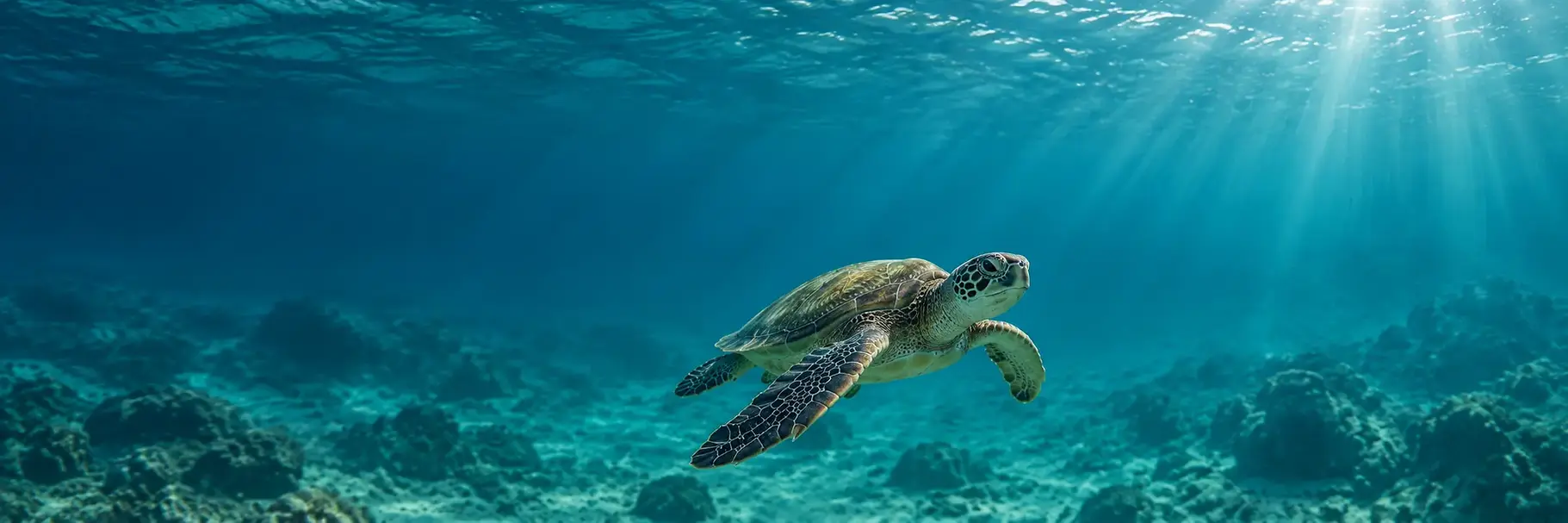
Marine Turtle Strandings
A marine wildlife stranding occurs when a sick, injured, distressed or deceased marine animal is found on a beach, shoreline or in waters close to land. Marine turtles can become stranded for many reasons.
Marine turtles can become stranded for many reasons:

Illness & Injury
Marine turtles can become stranded due to illness, injury, disease or natural causes.

Human-related Threats
Vessel strike, entanglement, ingestion of marine debris and other human-related activities can lead to strandings.

Environmental Factors
Extreme weather and other natural causes, including the degradation of seagrass and other habitats, can affect turtle health and make them vulnerable.
Capricorn Coast Marine Community (CCMC) supports appropriate responses to sick, injured, stranded and deceased marine turtles across the Capricorn Coast.
Our trained marine stranding responders work within Queensland's marine wildlife stranding framework, helping ensure turtles are reported and appropriately assessed and that relevant information about strandings is recorded.
What to Do if You Find a Marine Turtle
If you find a marine turtle that is sick, injured, stranded or deceased:
-
Report the turtle as soon as possible through the QWildlife app or Queensland Government marine wildlife stranding hotline.
-
Note the exact location and, if safe to do so, take photographs that may help responders locate and assess the turtle.
-
Keep people and dogs away and minimise disturbance around the animal.
-
Do not return the turtle to the water. A turtle found ashore may be sick, injured or exhausted and may require assessment.
-
Do not move, transport, feed or attempt to treat the turtle unless instructed by an authorised wildlife responder.
-
If safe, remain nearby at a distance until you receive further instructions.
Report a Marine Turtle Stranding
Found a sick, injured, stranded or dead marine turtle?
Report it through the QWildlife app or contact the Queensland Government marine wildlife stranding hotline.
Marine Wildlife Stranding Hotline
1300 130 372
Report it through the QWildlife app
Do not attempt to move or return a marine turtle to the water unless instructed by an authorised wildlife responder.
If you see a stranded animal, report it. Your information could help save a life.
WHY REPORTING MATTERS
Information Helps Protect Turtles
Information collected from marine wildlife strandings contributes to the Queensland Government's StrandNet database.
Stranding records help build knowledge about marine turtle health and mortality and can identify threats such as vessel strike, entanglement, marine debris, disease and other natural or human-related causes.
Over time, this information helps researchers and wildlife managers better understand threats to marine turtles and can inform conservation and management decisions.

CCMC is working to strengthen local marine turtle stranding response capacity by supporting trained responders, encouraging community reporting and building a stronger local network for marine turtle conservation.
